
Do rats look for water after eating poison? A rat may still visit water along a familiar route. Drinking gives you little information about whether it ate bait. Where the rat ends up depends partly on its usual routes and shelter.
The idea that a poisoned rat always leaves a house to find water sounds reassuring when you are treating an indoor infestation. In practice, some rats die outside and others die in a wall, attic, or other sheltered part of a building. Start with the places where you already see signs of activity.
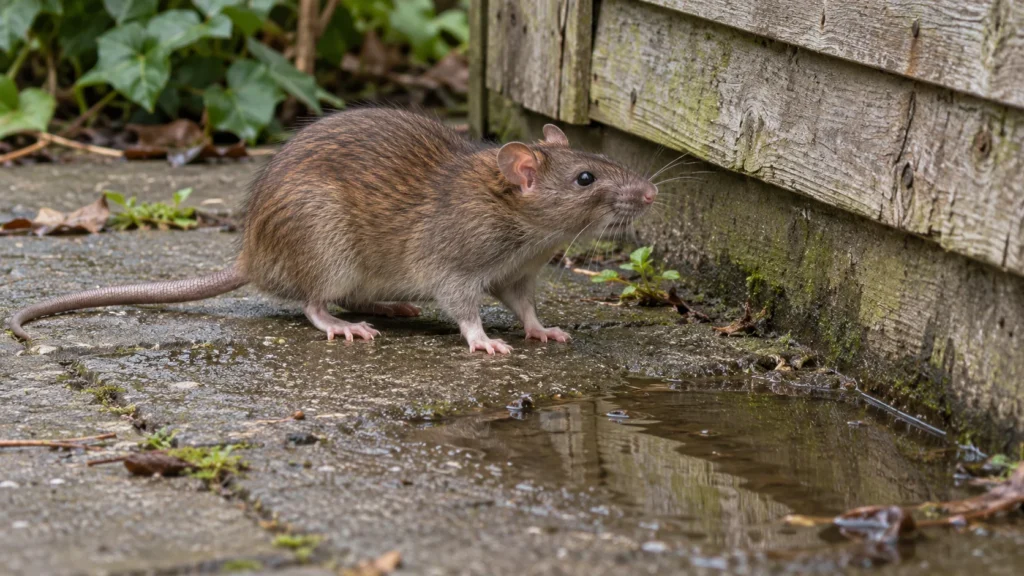
Do rats look for water after eating poison?
Rats learn where to find food, water, and shelter. A rat that regularly crosses a yard or follows a pipe to a water source may keep using that route for a time after it eats bait. You may also see an ill rat move less or stay close to cover.
Finding a rat near a puddle, drain, or pet bowl tells you where it was found. The location alone cannot establish poisoning, identify the active ingredient, or show how much bait the rat ate.
Does rat poison make rats thirsty?
Some ingredients can affect thirst. Cholecalciferol, also called vitamin D3, can raise blood calcium to harmful levels and damage the kidneys. Increased thirst and urination are among the reported signs in poisoned animals. That effect varies with the ingredient and the exposure, so it gives you little basis for predicting a rat’s route.
3 ways different rat poisons affect rodents
- Anticoagulants interfere with blood clotting. Serious poisoning can lead to internal bleeding, weakness, and reduced movement. Signs can take time to develop.
- Bromethalin affects the nervous system. An affected animal may lose coordination or have difficulty moving.
- Cholecalciferol disrupts calcium balance. Kidney effects may contribute to increased urination, thirst, and dehydration.
The label lists the active ingredient. Our guide to how different rat poisons affect rodents explains why the signs and timing vary between products.
Why a poisoned rat may be found indoors or outside
A rat living in an outdoor burrow may return there after feeding. One that shelters in an attic or behind a kitchen appliance may remain inside. Roof rats often use elevated routes, while Norway rats commonly use burrows and lower areas. Look where you have seen droppings, gnaw marks, or repeated activity.
A strong odor in one room can help narrow your search for a carcass. If the source appears to be inside a wall or another inaccessible space, ask a pest professional to locate it and check how rodents entered.
What to check after baiting
- Check the usual routes. Look near the places you have seen activity, including along walls, behind appliances you can reach safely, and near accessible shed or garage corners.
- Keep pets and children away. Restrict access to bait and dead rodents. A pet that eats bait or a suspect carcass needs prompt veterinary advice.
- Clean up carefully. Wear gloves, wet a carcass and the surrounding area with a suitable disinfectant, and follow the label’s contact time before double-bagging it. Follow local disposal requirements. Avoid dry sweeping or vacuuming rodent droppings.
- Address the conditions that draw rats back. Fix leaks, secure food and garbage, and close entry gaps. Follow the product label for checking stations and disposing of leftover rat bait.
Conclusion
Do rats look for water after eating poison? Some may drink along a route they already use. Check the places rats feed, travel, and shelter around your property. Those are the areas most likely to give you useful clues.
FAQs
Do rats drink water after eating poison?
They can. A rat may drink as part of its normal routine, and some ingredients can affect thirst. Drinking by itself tells you little about whether the animal ate bait.
What do rats do after they eat poison?
At first you may see ordinary activity. As poisoning progresses, signs can include reduced feeding, weakness, or poor coordination, depending on the active ingredient.
How long does a rat last after eating poison?
It varies. Anticoagulants often act over several days, and other ingredients can act on different timelines. Use the product label to understand what to expect, and watch for fresh signs of activity when checking whether control is working.